Resume Tips, Career Advice
What Makes a Good Resume?
Learn what makes a good resume, from clear formatting and relevant experience to strong achievements, keywords, and a professional presentation that helps recruiters understand your value.
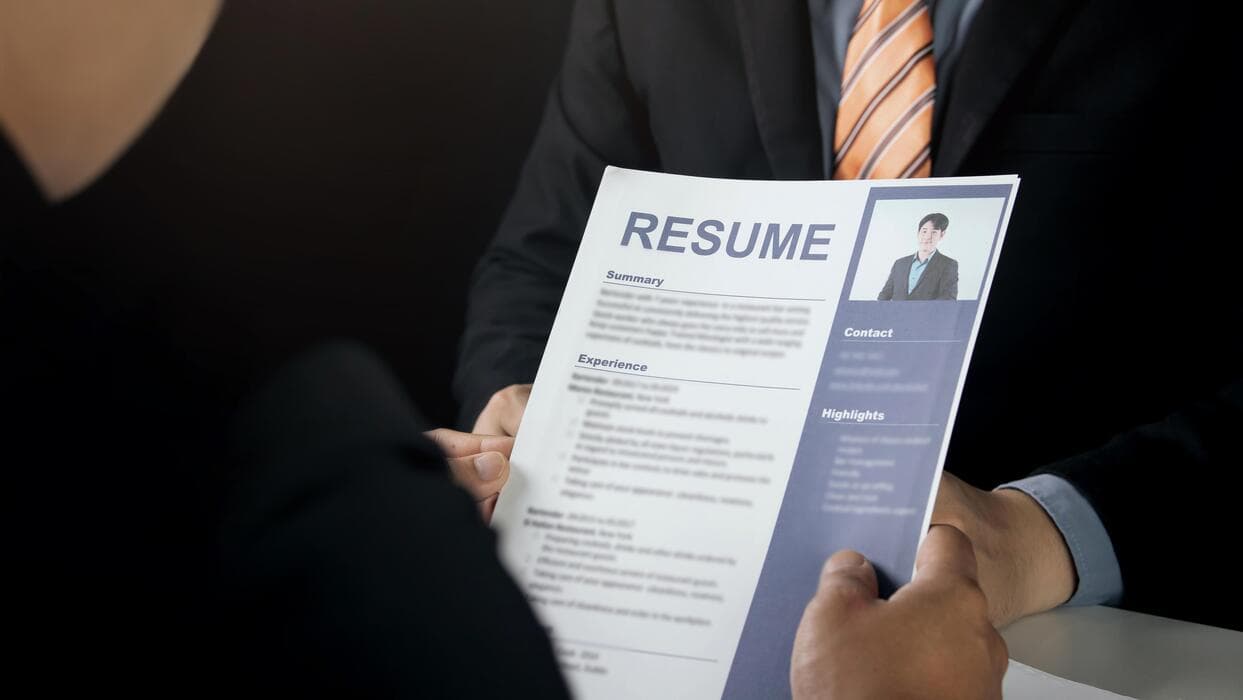
What Makes a Good Resume?
A resume is often the first introduction you make to a potential employer.
Before a recruiter speaks with you, meets you, or learns about your personality, your resume is usually what represents you. It tells the employer where you have worked, what you know, what you have achieved, and why you might be a good fit for the position.
That is why creating a good resume is not simply about listing everything you have done.
A good resume is about presenting the right information in the right way.
You may have excellent skills and years of experience, but if your resume is difficult to understand, filled with unnecessary information, or not relevant to the job, those strengths may not get the attention they deserve.
So, what actually makes a resume good?
The answer is simpler than many people think.
A good resume is clear, relevant, accurate, easy to read, and focused on what you can bring to the role.
A Good Resume Starts With Clarity
When someone opens your resume, they should not have to work hard to understand who you are.
Your name, professional identity, experience, skills, and contact information should be easy to find.
For example, if you are a software developer, the recruiter should quickly understand that you are a software developer. If you are a financial analyst, your resume should immediately communicate that.
Avoid making the recruiter guess.
A simple structure is often more effective than a complicated design. Your resume should have clear sections for your summary, skills, experience, education, certifications, and other relevant information.
The purpose of formatting is to make the content easier to understand, not to distract from it.
Relevance Is More Important Than Length
One of the biggest mistakes people make is trying to include everything they have ever done.
A resume is not your complete professional history.
If you have worked for ten years, you don't necessarily need to give equal attention to every role, project, technology, or responsibility from those ten years.
Instead, think about the job you are applying for.
What does the employer need?
Which parts of your experience demonstrate that you can perform the role?
Those are the details that deserve the most attention.
For example, if you are applying for a backend developer position, your experience with APIs, databases, backend frameworks, cloud services, and system development may be more important than an unrelated skill you used several years ago.
A good resume is selective.
It does not try to say everything.
It focuses on what matters.
Your Resume Should Tell Your Professional Story
A resume should not feel like a random collection of job titles and skills.
There should be a clear connection between your experience and the person you are today.
Imagine a recruiter reading your resume.
They should be able to understand how your career has developed, what you have learned, and what kind of professional you have become.
Your professional summary can introduce that story.
Your experience section provides evidence.
Your skills section supports it.
Your projects and certifications can add additional context.
When these sections work together, the resume becomes much more powerful than a simple list of qualifications.
Focus on Achievements, Not Just Responsibilities
There is a major difference between describing what you were responsible for and explaining what you accomplished.
Consider this statement:
Responsible for developing web applications.
It tells the recruiter very little.
Now consider:
Developed and maintained web applications using ASP.NET Core and React, improving application response time by 30%.
The second statement provides much more information.
It tells the recruiter what you worked on, which technologies you used, and what result you achieved.
Whenever possible, explain the impact of your work.
Did you reduce costs?
Improve performance?
Increase revenue?
Save time?
Improve customer satisfaction?
Deliver a project?
Automate a manual process?
The result makes your experience more meaningful.
Use Keywords Naturally
A good resume should also use terminology that is relevant to the position.
If the job description mentions Python, SQL, Power BI, and data analysis, and you genuinely have experience with those skills, make sure they are clearly represented in your resume.
This is useful because modern recruitment often involves Applicant Tracking Systems, or ATS platforms, which can help employers organize and search applications.
However, don't turn your resume into a collection of keywords.
A skills list such as:
Python, SQL, Excel, Power BI, Tableau, AWS, Java, Git
doesn't explain what you actually did.
It is much stronger when those skills appear naturally in your experience.
For example:
Used Python and SQL to analyze customer data and developed Power BI dashboards that helped management track monthly performance.
Now the keywords have context.
Keep the Design Professional
A good resume does not need to be extremely colorful or filled with graphics.
Design should support readability.
Choose a professional font, use consistent spacing, create clear section headings, and make sure the document is easy to scan.
You can still create a modern and attractive resume without making it complicated.
Be careful with excessive columns, graphics, icons, charts, and decorative elements, particularly when applying online.
Your resume may be processed by recruitment software before a recruiter reads it.
The safest approach is to keep important information as actual text and maintain a straightforward structure.
Write for Humans, Not Just Software
It is easy to become obsessed with ATS optimization.
People sometimes spend so much time trying to include keywords that they forget someone will eventually read the resume.
A recruiter does not want to see the same keyword repeated twenty times.
They want to understand your experience.
If you claim to know Java, show how you used Java.
If you claim leadership experience, explain what you led.
If you say you improved performance, explain what you improved.
A good resume works for both technology and people.
It should be easy for software to process and easy for a human to understand.
Keep Your Resume Accurate
Never exaggerate your experience just because a job description contains certain keywords.
If you have never worked with Kubernetes, don't add Kubernetes simply because the employer mentions it.
If you have basic knowledge of a technology, describe it honestly.
Your resume may help you get an interview, but the interview will test whether you actually understand what you claimed.
Accuracy builds credibility.
A strong resume represents your real skills rather than trying to create an unrealistic version of your professional background.
Your Resume Should Be Easy to Scan
Recruiters often review many applications.
Your resume should allow someone to quickly find the information they need.
They should be able to identify your current role, previous experience, major skills, education, and relevant achievements without reading every sentence carefully.
This is why clear headings and concise descriptions matter.
Long blocks of text can make important information easy to miss.
You don't need to remove all detail.
You simply need to organize that detail properly.
Tailor Your Resume When It Matters
You don't necessarily need to create an entirely new resume for every application.
However, your resume should reflect the position you are targeting.
If you are applying for a frontend developer role, emphasize your frontend experience.
If you are applying for a data analyst position, highlight your analytical skills and relevant projects.
If you are applying for a management position, demonstrate leadership and decision-making experience.
The same person can be suitable for several types of positions.
Your resume should make the relevant side of your experience easier to see.
Proofread Before You Apply
A small spelling mistake may seem insignificant, but your resume represents your professionalism.
Before submitting it, read the document carefully.
Check company names, job titles, dates, technologies, contact information, grammar, and spelling.
Also check the final file itself.
Make sure the formatting has not changed, links work correctly, and the document opens properly.
A few minutes of proofreading can prevent avoidable mistakes.
Final Thoughts
A good resume does not need to be complicated.
It needs to be clear.
It needs to be relevant.
It needs to show evidence of your skills.
It needs to communicate your achievements.
And it needs to make it easy for the employer to understand why you could be a good fit for the position.
Think of your resume as a professional introduction rather than a complete record of your life.
You are not trying to tell the recruiter everything you have ever done.
You are showing them the parts of your experience that matter most for the opportunity in front of you.
Use a clear structure, write naturally, include relevant keywords, focus on achievements, keep the design readable, and make sure every important statement is accurate.
Most importantly, remember that the best resume is not necessarily the one with the most information.
It is the one that makes the right information easy to find.
That is what makes a resume good.
Build an ATS-Ready Resume in Minutes
Our online resume builder combines AI bullet writing, ATS-optimized templates, and clean vector PDF exports (available on Pro).
Recommended Tool
Put this advice to work
Build an ATS-ready resume with live preview, AI bullet rewriting, and vector PDF exports on Pro.
Also read our complete ATS Resume Guide →